
The final step of the Setup Phase is to secure your strategic assets in protective casings. In the world of the ArcaneDex, sleeving your deck is the equivalent of placing your wild creatures into high-grade Poké Balls. It is an act of equipment maintenance, ensuring the deck’s longevity and preserving its condition for the grind ahead.
The Shield of Longevity #
A serious Trainer understands that their tools must withstand the rigors of the journey. High-quality sleeves are recommended as a non-negotiable asset for two primary reasons. First, they provide superior protection against the friction of shuffling. A raw card will fray and whiten at the edges over time, degrading its value and legibility; a sleeved card remains pristine, preserving the visual fidelity of the art. Second, they offer an excellent, consistent tactile experience. The smooth finish of a matte sleeve reduces the static cling and friction between cards, allowing for a fluid, professional “mash shuffle” that helps you clear your mind and focus solely on the queryThe input command for the system. A reading is only as power More at hand.
The Uniformity Protocol #
Beyond mere protection, the sleeve serves a critical function in the integrity of the reading, known as the Uniformity ProtocolThe mandatory rule of using opaque sleeves. Because the deck More. Because this deck is constructed from various sets blending vintage Base Set cards with modern Full Arts the physical condition and even the printed backs of the cards will vary significantly.
An opaque sleeve of a single color is mandatory to unify the deck’s appearance, masking these differences. This ensures that when the cards are face-down in the draw pile, you cannot subconsciously identify a specific card by a scuff mark, a yellowed edge, or a different card back design. This layer of anonymity ensures that every draw is governed purely by true RNG (Random Number Generation) and game sense, rather than visual bias or memorized patterns.
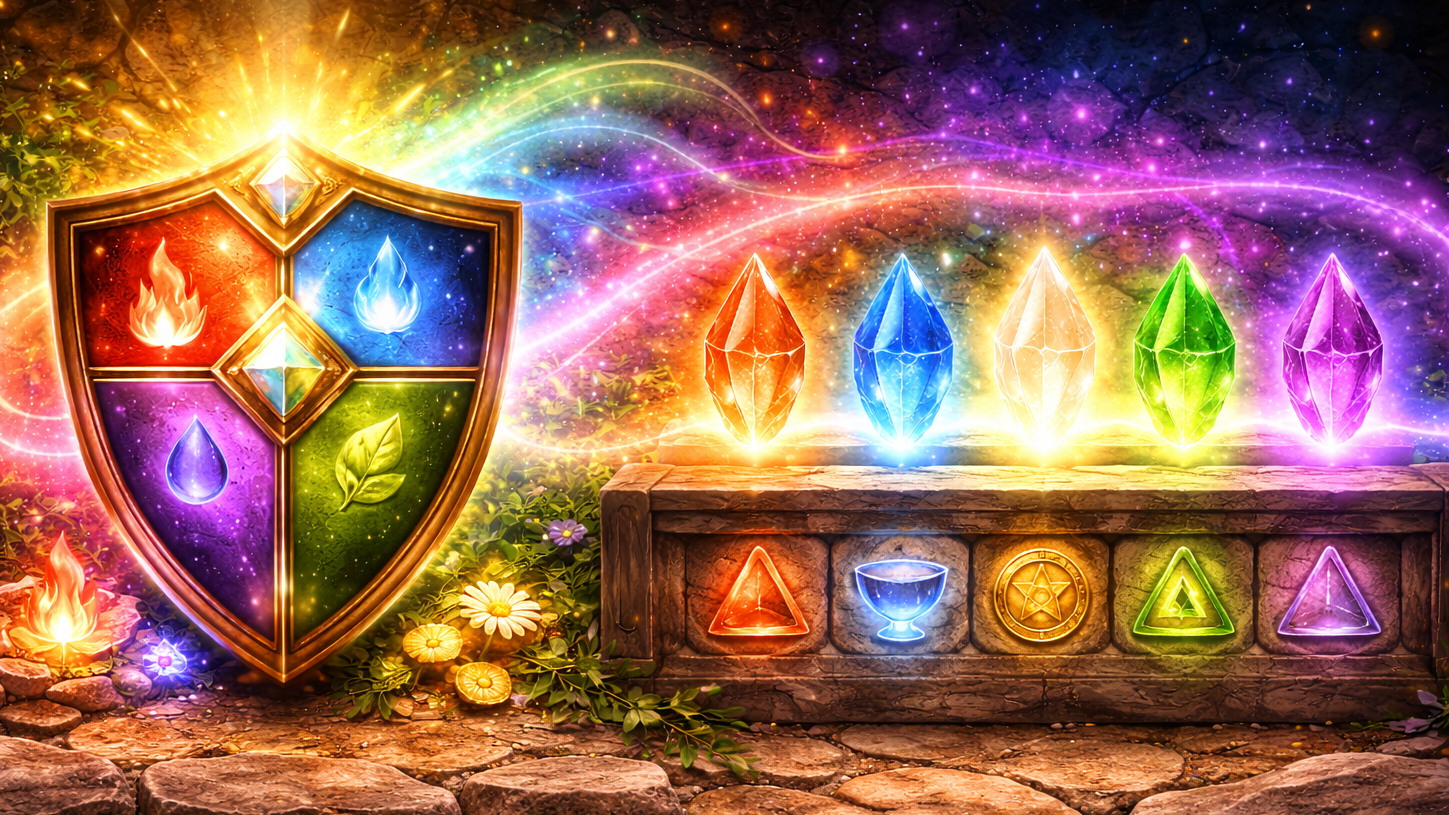
Chromatic Resonance: Choosing Your Color #
The choice of sleeve color is the final aesthetic touch in defining the personality of your deck. While you might choose a clean, neutral color like black or gray to allow the card artwork to take center stage, you may also select a color that resonates with the core energies you wish to cultivate:
Crimson or Red:
To amplify the passion, drive, and creative fire of the Wands.
Azure or Blue:
To enhance the emotional depth, intuition, and flow of the CupsThe Suit of Emotion. Represents the "Support & Healing" More.
Purple or Violet:
To align with the psychic insight and mental clarity of the Swords and Major Arcana.
Green or Earth Tones:
To ground the deck in the material stability and growth of the Pentacles.
This final layer of protection and aesthetic consistency completes your deck’s transition from a loose collection of cards into a single, cohesive, and powerful strategic tool.